

Create your FREE profile now!
Join the discussion with researchers around the globe - sign up for your free Cureus account today.
About
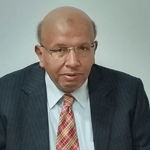
Professor Khaled F. M. Salem is affiliated with the Department of Biological Sciences, Faculty of Science and Humanities, Shaqra University, Ad-Dawadimi, Saudi Arabia, and the Department of Plant Biotechnology, Genetic Engineering and Biotechnology Research Institute (GEBRI), University of Sadat City, Egypt. He earned his B.Sc. in Crop Science (with Excellent with Honors) in 1993 and his M.Sc. in Rice Breeding in 1998 from Menoufiya University, Egypt. His M.Sc. research was conducted at the Rice Research and Training Center (RRTC), Field Crops Research Institute, Agricultural Research Center, Giza, Ministry of Agriculture, Egypt. In 2004, he received his Ph.D. in Plant Breeding and Genetics from Martin Luther University Halle-Wittenberg, Germany, with his doctoral research carried out at the Leibniz Institute of Plant Genetics and Crop Plant Research (IPK), Gatersleben, Germany. From 2001 to 2004, he served as a visiting scientist at the Gene Bank Department and the Gene and Genome Mapping Group, IPK, Germany. Professor Salem has also completed multiple international training programs as a visiting scientist in Germany, China, Italy, Spain, Turkey, and CIMMYT (International Maize and Wheat Improvement Center). He is an active member of the international scientific community, serving as a reviewer for more than 50 international journals and as an editor for several scientific journals and special issues. To date, he has authored 78 peer-reviewed articles, 30 book chapters, and 25 conference proceedings, and has edited three reference books covering plant biotechnology, genetic resources, breeding, and genomics. He also edited the specialized reference book Plant Gene Bank: Genetic Resources Collections, Conservation and Sustainable Utilization. In addition to his contributions in teaching, research, and academic advising, Professor Salem has a strong interest in agricultural innovations and sustainability. His research over the past three decades has focused on the biotechnology and breeding of cereal, fiber, and vegetable crops, with a particular emphasis on genomic tools for crop improvement. He has also mentored and supervised numerous M.Sc. and Ph.D. students, contributing to capacity building in plant biotechnology and breeding.