

Agriculture and Food Science Research: Top Emerging Trends in 2026
Megha Bisht | Sep 09, 2026
Linkedin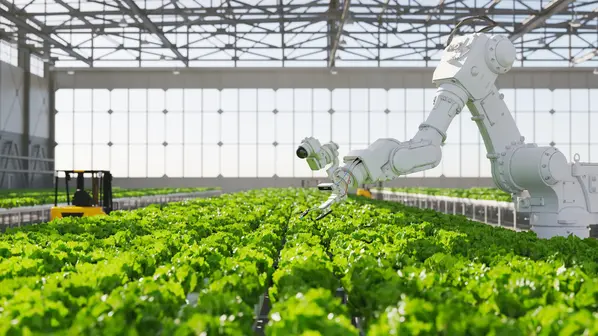
The global food industry is under growing pressure. Growing population, climate volatility, economic shocks, and a shift in consumer expectations are making food production and distribution less predictable. Currently, producing more food is only part of the challenge.
These concerns are prompting researchers globally to rethink how food is grown, processed, distributed, and consumed. Researchers are working to develop methods that utilize fewer resources, withstand extreme conditions, reduce food wastage, and make nutritious diets more affordable.
This blog uncovers the emerging agriculture and food science trends gaining attention in 2026. The trends will combine current research in food science, digital technologies, and emerging sustainable production methods.
Top Emerging Agriculture and Food Science Research Trends in 2026
To ensure a safe global food supply and make agriculture sustainable and accessible, it is increasingly important to focus on emerging food science research. The latest trends in agriculture and food science include the following:
Digitalization and AI-Led Food Production
Digitalization in food production has moved well past stand-alone tools. AI is increasingly functioning as a coordinating layer that pulls together weather data, crop health readings, input availability, machinery status, logistics, and market conditions into a single operating picture. Where earlier systems were built for one job, yield prediction being the obvious example, newer ones are being designed to inform decisions across an entire operation at once. Human judgment still matters here, since farm data cannot fully account for local soil variation, animal behavior, labor constraints, or a market shifting overnight.
The measurement side of this relies on sensors, machine vision, drones, GPS, and connected equipment. These tools can pick up early signs of crop stress, disease, contamination, equipment failure, or quality defects well before the problem becomes visible to a person surveying the field. The same monitoring feeds into breeding decisions, feeding schedules, irrigation timing, production planning, and shelf-life tracking.
Robotics is taking over the repetitive parts of the work, including harvesting, sorting, packaging, and inspection, freeing labor for tasks that require judgment. On the processing side, established non‑thermal methods such as high‑pressure processing, along with emerging approaches like pulsed electric fields, ultrasound, and cold plasma, are being explored to control microorganisms while preserving food quality more effectively than conventional heat treatments. Blockchain is also finding a role here, mainly in improving traceability across production and retail.
Emerging Research in Sustainability
Sustainability in the food industry has moved well past eco-friendly labeling. The practical challenge researchers and producers face is producing nutritious food while reducing land, water, energy, and chemical inputs, and cutting down on losses from what has already been grown.
Researchers and producers are addressing this challenge through several approaches:
- Organic farming: Limits synthetic pesticides and fertilizers while supporting soil health and biodiversity.
- Regenerative agriculture: Uses crop rotation, cover crops, composting, and reduced tillage to rebuild soil structure and improve water retention.
- Agroforestry: Integrates trees with crops or livestock, protecting soil, supporting biodiversity, and creating an additional income stream for farmers.
- Precision farming: Applies sensors, GPS, and field data to direct water, fertilizer, and crop treatments only where they are actually needed.
- Integrated pest management: Combines biological, mechanical, and targeted chemical controls to limit pesticide use and delay the development of resistance.
- Food waste reduction: Deliberate harvesting, storage, inventory planning, portion control, and surplus redistribution to prevent losses that are otherwise avoidable.
- Circular solutions: Redirecting food by‑products into new ingredients, returning nutrients to the soil through composting, and using shelf‑stable or recyclable packaging to limit downstream waste.
Focus on Measurable Regenerative and Bio-Based Solutions
Sustainability work has moved past theoretical modeling into something more concrete, actually measuring outcomes rather than just projecting them. It involves examining whether regenerative farming and biological products deliver measurable gains in soil health, biodiversity, crop resilience and farm income.
Biosolutions and microbiome scaling
A good deal of research effort has gone into synthetic microbial communities and biocontrol agents aimed at improving soil health and crop resilience. Findings suggest that combining chemical and biological inputs can meet soil organic matter targets and support remediation efforts, pointing toward a next generation of biofertilizers built on that hybrid approach.
Agroecology and biodiversity
Other work has compared intercropping and agroforestry systems directly, quantifying benefits that used to be treated as secondary, such as pollinator diversity, bird populations, and soil microbial activity. This ties into a broader shift sometimes called nature-positive agriculture, which treats overall ecosystem health as the goal rather than carbon reduction alone.
Challenges Facing the Agriculture and Food Industry
Agricultural and food research may produce promising solutions, but applying them across diverse farms, markets, and supply chains remains difficult. Key challenges include:
- Climate and resource pressures: Extreme heat, droughts, floods, water scarcity, and soil degradation threaten production and food security.
- Unequal access to technology: AI tools, sensors, robotics, and precision equipment require capital, connectivity, electricity, and technical skills. These barriers particularly affect small-scale producers.
- Difficult commercial scaling: Technologies that succeed in laboratories may perform differently under variable soil, weather, processing, and storage conditions. For instance, smart packaging also faces manufacturing and commercialization barriers.
- Infrastructure gaps: Inadequate cooling, storage, and transport can cause food loss even when farm productivity improves.
- Regulatory complexity: Rules governing biological products, novel foods, gene-edited crops, and intelligent packaging differ between markets, increasing testing costs and approval timelines.
- Food safety and data concerns: Climate change can alter contamination risks, and managing those risks increasingly depends on connected systems that monitor pathogens, residues, and supply‑chain safety. However, these systems raise questions about cybersecurity, privacy, and data ownership, making food safety inseparable from how securely and fairly data is handled. Wider adoption will require affordable technologies, reliable infrastructure, consistent safety standards, local testing, and transparent data governance.
Conclusion
Farmers are facing multiple pressures: weather that is harder to predict, consumer habits that shift faster than supply chains can keep up, and a changing regulatory environment. That is a big part of why AI, biotechnology, and sustainable farming methods are drawing significant research attention in 2026.
It is imperative to understand that none of these work in isolation. Their convergence signifies a shift towards more intelligent, regenerative, and autonomous agriculture that is leading to more inclusive growth for both farmers and conscious consumers. The aim here is to feed the world while preserving the ecological balance.
FAQs
What are the latest trends in agricultural research?
Current research is focused on:
- Climate-resilient crops and farming methods
- AI-based farm monitoring and climate advice
- Biotechnology, advanced fermentation, and alternative proteins
- Soil restoration, water conservation, and waste reduction
How is AI transforming agriculture?
AI pulls together data from sensors, drones, satellites and weather services. That combination lets it detect crop stress and pests early, estimate yields and manage irrigation, and flag weather risks before they hit. Agentic AI can string several of these tasks together, but the big calls are still made by the farmer, not the system.
What is precision agriculture?
It is a farming approach that uses GPS, sensors, satellite images, and field data to map out how conditions vary across a single farm. Farmers can then apply water, seed, fertilizer, or crop treatments only where they are actually needed, instead of across the whole field.