

Create your FREE profile now!
Join the discussion with researchers around the globe - sign up for your free Cureus account today.
About
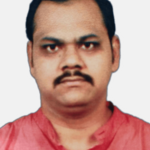
Dr. Shubhadip Dasgupta is a soil researcher and currently serving as an Assistant Professor (Stage III/ Senior Scale) at the Department of Agricultural Chemistry & Soil Science, State Agricultural University, West Bengal, India. His active involvement includes regular teaching, research and extension of knowledge in various agricultural domains: Soil Fertility and Natural Resource Assessment and Characterization, Manures and Fertilizer Recommendation, Proximal and Remote Soil Sensing, Crop Nutrition, and Soil Science. As a dedicated educator, he also has expertise in teaching soil science courses to Undergraduate and Post Graduate students, sharing theoretical and practical (Laboratory and field based) knowledge and fostering a deeper understanding of soil and plant nutrition related topics. His Ph.D. was from Soil Sensor Laboratory, Department of Agricultural and Food Engineering, Indian Institute of Kharagpur, India and his research focused on applying smart and noble soil sensing options for the rapid estimation and mapping of soil fertility parameters. He is currently engaged in the All India Coordinated Research Project ‘Soil Test Crop Response and Fertilizer Recommendation,’ along with several other sponsored research projects. His research journey began with improving soil testing analytical methodologies, and he is currently focused on soil fertility assessment, monitoring, soil sensing, precision agriculture, and soil health management, soil pollution monitoring from diverse cropping system. His current research interests are using portable soil sensors like PXRF, Color Sensors, DRS, Digital Soil images for quick soil monitoring and mapping, digital soil mapping, soil image processing and subsequent modeling via machine and deep learning for rapid soil testing and judicious fertilizer recommendation.
In addition to Dr. Dasgupta’s academic role, he collaborates with farmers through different technology extension projects. These projects aim to bridge the gap between scientific research and practical implementation on the ground. By working closely with farmers, he contributes to the adoption of innovative soil management practices, sustainable agriculture, and improved crop productivity. Whether it’s introducing precision agriculture techniques or promoting soil health management strategies, he is committed to enhancing agricultural practices for the benefit of both farmers and the environment.